




Improving Innovation and Productivity In Earthworks
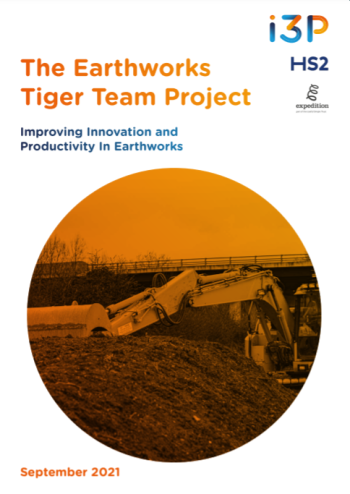
A new report Improving Innovation and Productivity In Earthworks from the Infrastructure Industry Innovation Partnership (i3P) has identified areas for efficiency improvements in the earthworks sector. These represent a potential 10-20% reduction in the UK’s annual spend on earthworks, which is currently between £1bn-£1.5bn.
Productivity in the UK’s construction sector has barely improved in the last 20 years. In 2020, i3P set up a Tiger Team to research the sector; the team has highlighted 24 opportunities which, if implemented, have the potential to save the industry £100m–£300m per annum. The recommendations could also see embodied carbon reduction and improved air quality.
A total of 28 organisations were involved in the research including the creators of some of Britain’s largest infrastructure projects – HS2, the Environment Agency, National Highways, EDF, Sellafield, Thames Tideway and the Northern Ireland Department of Infrastructure.
Among the opportunities identified to transform earthworks are proposals to:
- Expedite the use and development of Connected and Autonomous Plant (CAP) which has the potential to significantly increase the productivity, accuracy and safety of earthworks.
- Use state-of-the-art geotechnical testing technologies and real time performance indicators to improve earthworks placement quality and reduce programme delays.
- Adopt digital technology to improve communication, accuracy, control and predictability of earthworks processes.
- Encourage the use of alternative plant fuel types (e.g. electrified, hydrogen and hybrid technologies), which have the potential to reduce CO2 emissions, improve air quality and extend operational working hours.
Through its community and network, i3P will continue to champion the changes required.
You can access the report here.
[edit] Related articles on Designing Buildings
Featured articles
Check out some of the best features and news from Designing Buildings as well as key stories from around the web.

Government approach could undermine delivery and regeneration.
World's first mass timber data centre.

The overlooked environmental aspect of data centre development.
Introduction to radon awareness

New technical information sheet published by CIOB.

Updated supplier guide can help electrical contractors engage with NHP.

CIAT confirm the winners of the 2026 architectural technology awards.

Government launches a one stop shop for flood preparedness.

Sir Edwin Lutyens: Britain's greatest architect? Book review.

CIOB publishes free template to help assess and manage risks.
ECA's reflections on Party Conference season

Burnham wants to be confident of winning before asking for a fresh mandate.
New Chief Construction and Scientific Adviser

Sergio Cavalaro, Professor of Infrastructure Systems at Loughborough University.
Building safety levy for England

CIAT publish estimator tool for members.

Water sector faces a growing crisis that could slow the delivery of vital infrastructure.